Kiefer Smith
Junior Game Designer

Role: Level Designer
Last Rites is a VR horror escape room created in Unity during a one-month university project for Meta Quest headsets. Developed by a team of four, the project focused on creating an immersive horror experience through environmental storytelling, puzzle solving, and atmospheric level design.
As the project's Level Designer, I was responsible for designing the layout of the environment, guiding player progression, creating environmental puzzles, and building tension through lighting, pacing, and exploration. My goal was to ensure players naturally discovered objectives while maintaining suspense throughout the experience.
The project strengthened my understanding of VR level design by teaching me how spatial layouts, lighting, environmental detail, and object placement can influence player behaviour without relying on explicit instructions or UI guidance.
Creating a convincing horror experience in VR required balancing atmosphere, exploration, and puzzle solving within a one-month development schedule. The challenge was to maintain suspense while ensuring players could naturally navigate the environment without becoming confused or frustrated. Careful consideration was given to lighting, environmental storytelling, and pacing to guide players through the experience.
I approached the level design by first establishing the player's journey through the environment before layering in environmental storytelling, lighting, puzzles, and horror elements. Visual landmarks, lighting cues, and object placement were used to naturally guide players between objectives while maintaining tension and encouraging exploration.
The environment originally resembled a standard domestic living room. Through multiple iterations I transformed the space into a horror setting using atmospheric lighting, fog effects, environmental props, and visual storytelling. These changes significantly increased immersion and strengthened the overall horror experience.
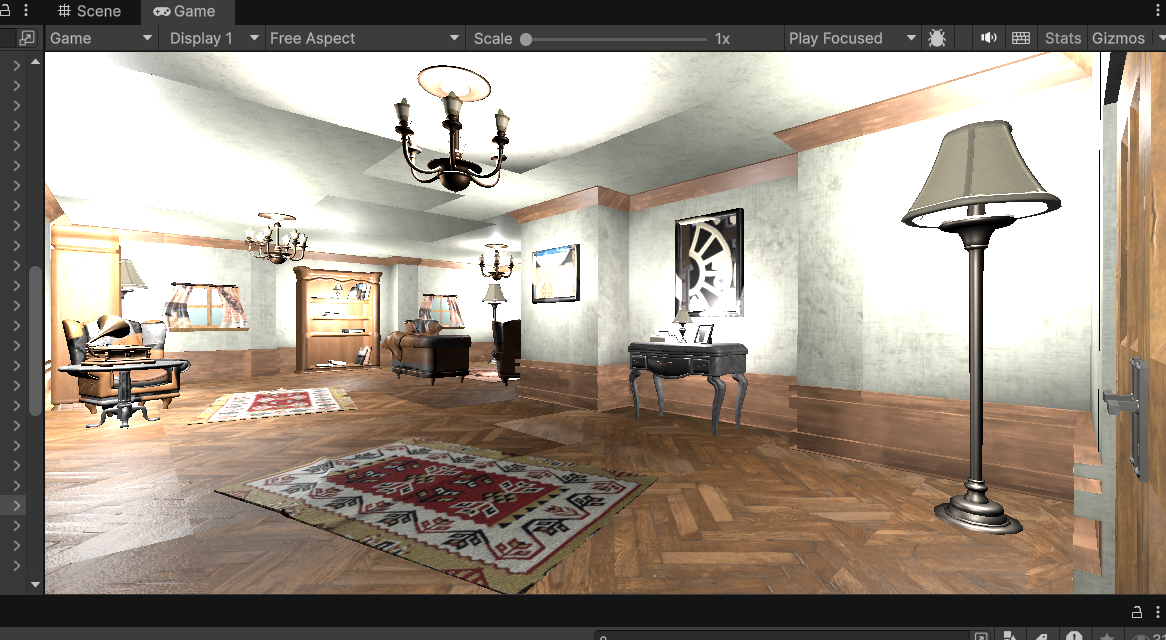
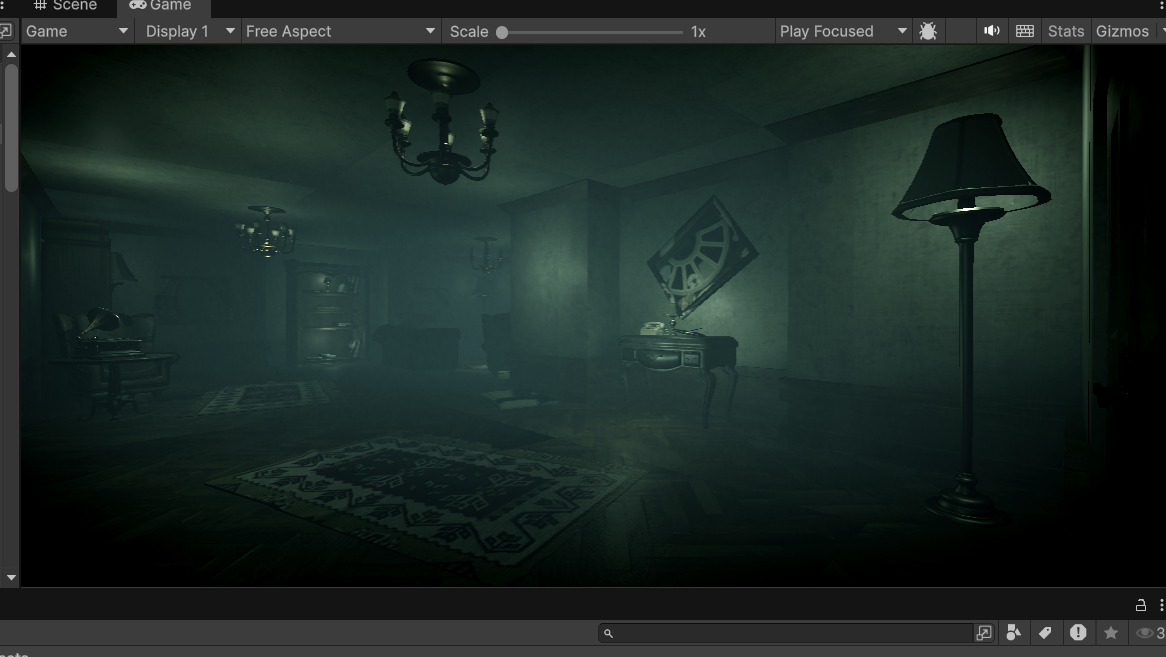
Playtesting sessions highlighted areas where navigation, puzzle readability, and environmental interaction could be improved. Feedback informed multiple design iterations, leading to clearer player guidance, better object placement, and a stronger balance between exploration and suspense.
The final project delivered a compact but immersive VR horror escape room that successfully combined exploration, puzzles, and atmospheric storytelling. The experience strengthened my understanding of VR level design, particularly how lighting, environment layout, and visual cues can influence player behaviour while maintaining immersion.